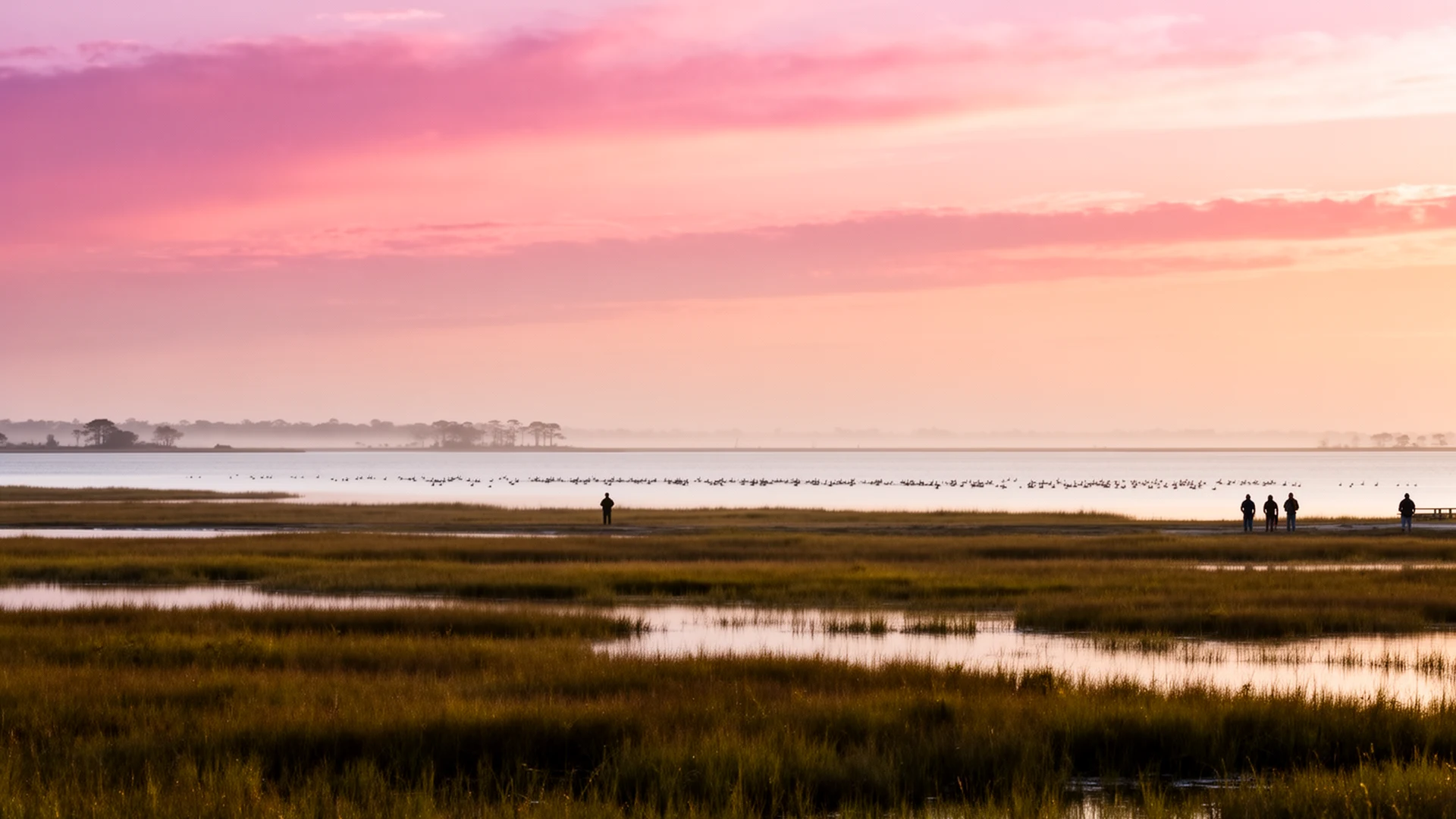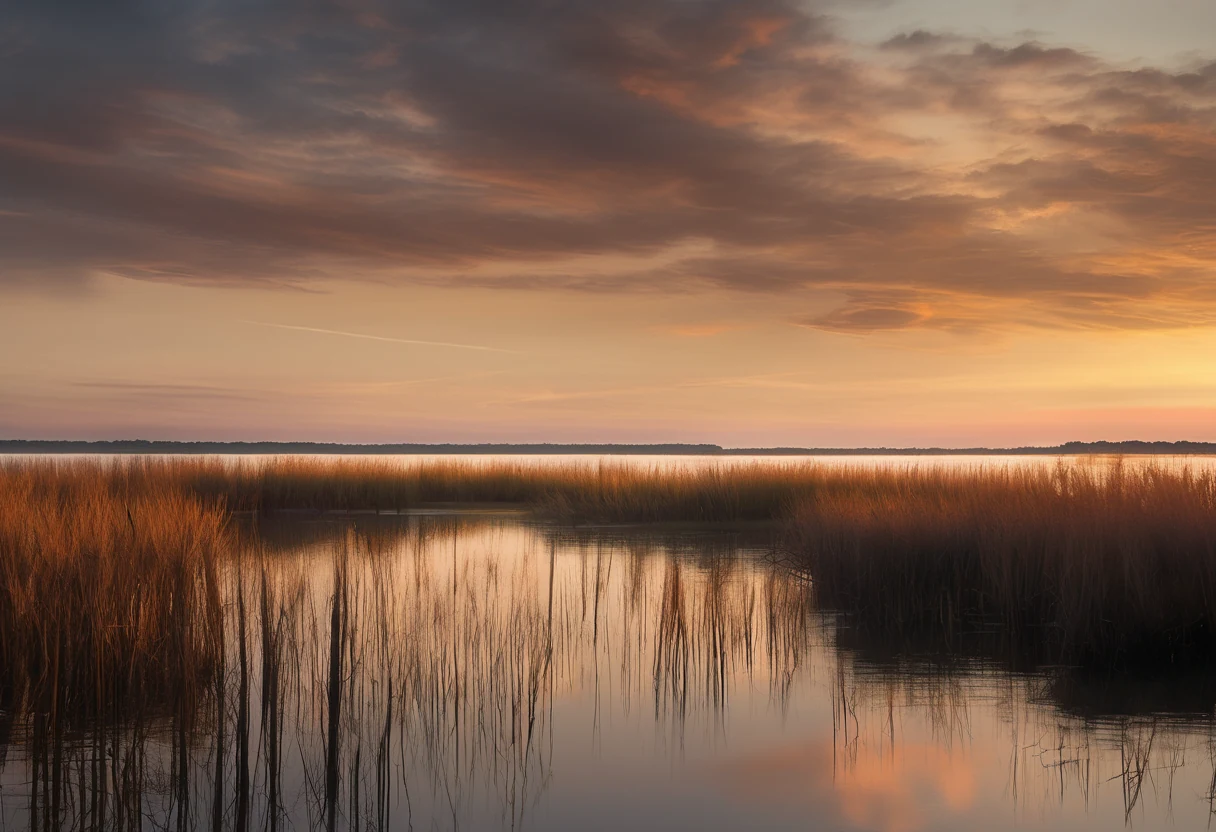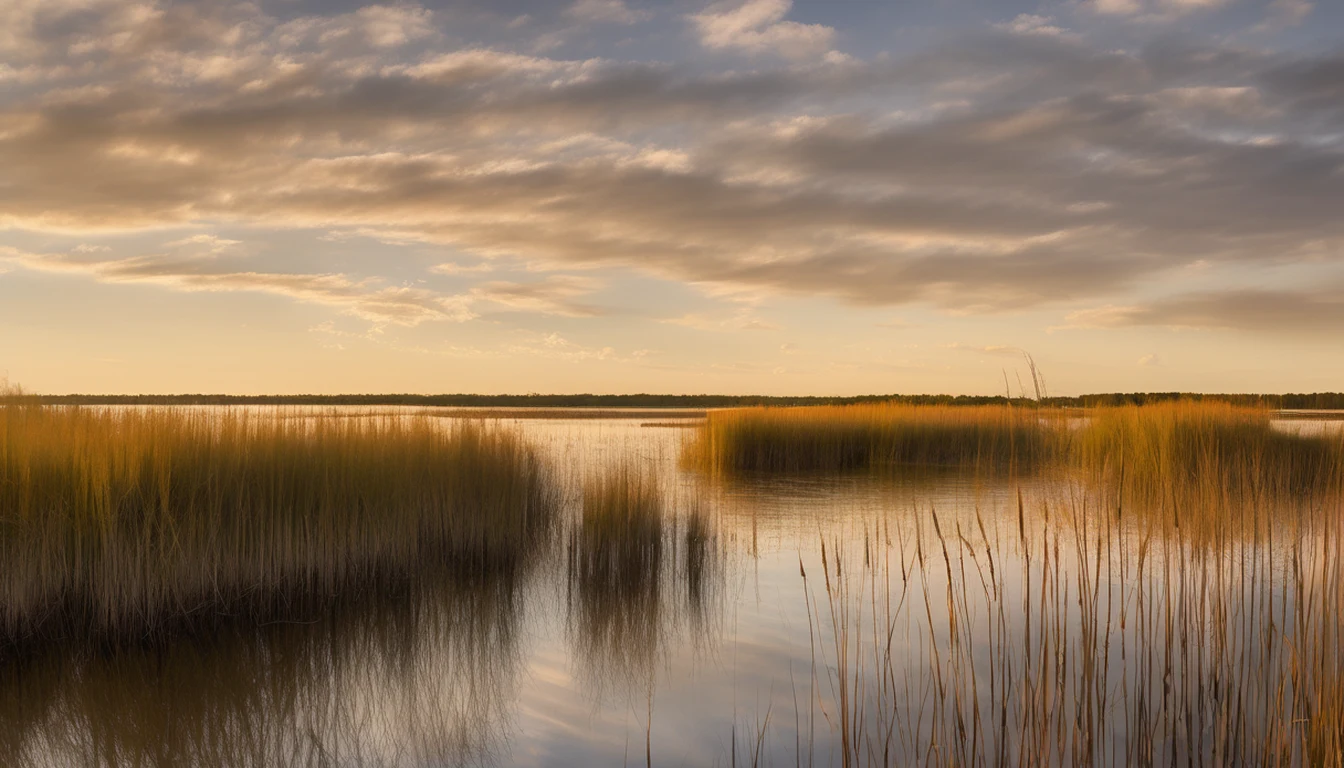


Every November, something happens at Lake Mattamuskeet that doesn’t happen much anywhere else on the East Coast: most of North Carolina’s wintering tundra swan population arrives, joined by thousands of Canada geese, snow geese, and roughly two dozen duck species, and stays through winter. It’s a documented pattern on the U.S. Fish & Wildlife Service’s own refuge pages, not a marketing line, and it’s the single fact that explains why a certain kind of buyer looks at Hyde County at all.
What the migration actually tells you. It tells you that mainland Hyde County — and specifically the ground in and around the Mattamuskeet National Wildlife Refuge and the nearby Swanquarter refuge — supports a real, working waterfowl economy: a permitted public hunt program on refuge land, and private impoundments and blind leases on the ground around it. It also tells you that federal refuge and wilderness acreage near the lake will never be developed, which puts a hard ceiling on how much huntable, birdable private land exists close to the water.
What it doesn’t tell you. It doesn’t hand you a per-acre premium for “waterfowl-adjacent” ground, and we’re not going to invent one. No clean, current dataset isolates a Mattamuskeet premium from ordinary variation in acreage, drainage, and road frontage, and anyone who quotes you a confident countywide number is guessing. What you can evaluate, parcel by parcel, is proximity to the refuge system, the condition of any existing impoundment infrastructure, and whether lease income (if a property has it) is documented in writing rather than described verbally by a seller.
If you’re evaluating a specific hunt-land parcel near the lake, that’s a conversation, not a spreadsheet formula — and it’s worth having before you get attached to a number nobody can back up.