

The deed you get handed for an Ocracoke family lot might be typed on a 1960s form with one name on the grantee line, and that name has been dead for thirty years. The tax bill still goes to that name. The house has been in the family since long before the ferry ran on a printed schedule, handed down the way a fig preserves recipe gets handed down, which is to say without paperwork.
That is heirs’ property: land owned in common by the descendants of somebody who died without a will, or whose estate was never probated. It’s common across eastern North Carolina, and Hyde County has its share. Ocracoke, where families have held the same sandy lots for generations, is exactly the kind of place where it lingers.
It isn’t automatically a bad buy. Some of the best ground on this coast changes hands this way, and an honest purchase can put real money into a family’s hands. What it is, is a purchase that runs on documents. Here are the seven to gather before you write an offer. One thing first, and it matters more than the list: I’m not a lawyer, this isn’t legal advice, and everything below describes records and statutes rather than telling you what your situation means. Hire a North Carolina real estate attorney before you spend money on anything else.
1. The full chain of title, not just the last deed
A copy of the current deed tells you almost nothing about an heirs’ parcel. What you need is the search behind it: every conveyance from the last person who held record title forward, plus the recorded liens, judgments, and deeds of trust that landed in between. Hyde County’s Register of Deeds keeps those records at 30 Oyster Creek Road in Swan Quarter, and that office holds the land records for the whole county, Ocracoke included. The deed room is at the county seat, not on the island, which matters more than buyers expect: the paper on an island lot sits across the Pamlico Sound, so pulling it takes a ferry trip, a courier, or a title company that works this county every week.
Why the whole chain instead of the last page: the number of undivided interests in the parcel is the deal. If the last recorded owner died in 1979 with four children, you aren’t buying from one seller. You’re buying from whatever those four branches have become since.
2. Certified death certificates for everyone in that chain
Family trees have holes in them, and a death certificate is how you fill one. Certified copies come from the Register of Deeds office in the county where the death actually occurred, or from NC Vital Records, and state law limits certified copies to applicants who can show the required relationship to the person named on the certificate. That’s usually why the family does this part rather than the buyer. Order more copies than you think you need: the attorney, the title company, and the clerk will each want one, and a second copy always costs less than a second trip to Swan Quarter.
3. The probate file, or the reason there isn’t one
For every owner in the chain who has died, you want the estate paperwork. The will, if there was one. Letters testamentary if the estate was probated. Letters of administration if the heirs opened one after the fact. Ask about the estate file at the Hyde County Clerk of Superior Court. In a lot of these cases the honest answer is that nothing was ever filed, and that answer is the reason the title is clouded in the first place. North Carolina does have a small estate procedure by affidavit, but it covers personal property; it does not transfer real estate. Land that passed without a probate still needs an estate opened, a court order, or a deed from every heir, and your attorney is the one who tells you which of those fits. It’s often the slowest and most expensive version.
4. A family tree tied to the intestate succession statute
When there’s no will, North Carolina’s intestate succession law decides who inherited and in what share. A spouse and children share; with no surviving spouse, the children take equally; the branches keep splitting from there, and half of them moved away forty years ago. The document to build is a written family tree with names, relationships, birth dates, and death dates for every generation, tied back to that statute. Practitioners ask for all of it, including the branches nobody speaks to anymore, because every missing branch is a person who can surface later with an interest in your lot. In one North Carolina heirs’ case the Southern Coalition for Social Justice has written about, more than sixty family members held an interest in a single piece of land, and many of them had never met each other.
5. The tax record and the payment history
Pull the county tax card and as many years of payment history as the Hyde County tax office will hand over. Two things hide in there. The first is who has been paying. A cousin who covered the taxes for twenty years has a contribution claim against the other co-tenants, and under state law that claim reaches back ten years of taxes paid before a partition case is filed. The second is what happened when nobody paid. Unpaid taxes on heirs’ property are one of the ways parcels leave families, so you want either a clean record or a clear understanding of what a tax sale would mean on this lot.
6. A current survey and the legal description
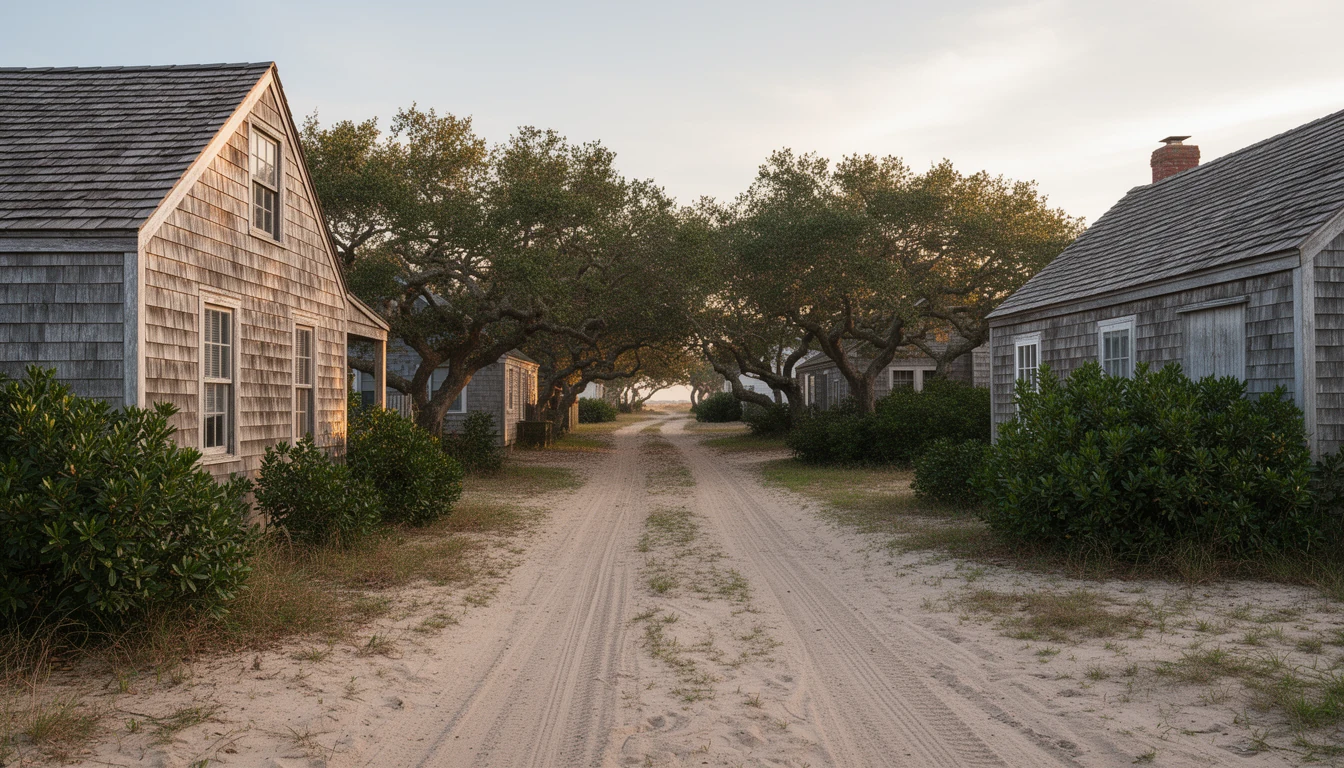
Old island deeds are often written in metes and bounds, measured from trees and stakes that are long gone. Have a licensed North Carolina surveyor put the boundary on paper and on the ground: corners, acreage, any recorded easements or rights of way crossing the tract, and where the parcel sits relative to NC 12 and the federal seashore line. On Ocracoke that last part isn’t a technicality. Cape Hatteras National Seashore was established in 1953 and runs the length of the island, and the village is private land sitting inside a federal seascape. A survey is how you find out whether the boundary somebody walked you to is the boundary you’re buying.
7. A title commitment or an attorney’s title opinion
This is the document that either confirms every interest in the chain has been assembled or shows you the one somebody missed. Title insurance can’t be written over a broken chain, so the commitment is also the test of whether the seller can actually convey clear title. Until it comes back clean, don’t hand over earnest money against a promise. Put the requirement in the contract: closing depends on a title commitment free of the title defects that come with heirs’ property, and the deed must be signed by every record owner of every undivided interest. That last clause is the whole ballgame. A deed missing one heir conveys that heir’s share to you and nothing more.
The risk that makes this list worth the trouble
Any co-owner in North Carolina can petition the superior court to divide a property or force its sale, no matter how small the fractional share, under the partition statutes the General Assembly rewrote in 2020. That’s the mechanism. A court can order mediation before it even considers a sale, and attorneys’ fees incurred for the common benefit of the co-tenants get allocated among them, but the leverage still belongs to whoever files first.
North Carolina has not adopted the Uniform Partition of Heirs Property Act, the model law other states use to give co-tenants extra protection in a forced sale. Adoption bills have come up in recent legislative sessions, so check the current status with your attorney, because if that changes, it changes this math.
That gap is why the predatory version of this transaction exists. An outside buyer acquires one heir’s fractional interest cheaply, then petitions to force a sale of the whole parcel, and a family that has held the land for four generations gets a check and loses the lot. Knowing the pattern is half of avoiding it, whether you’re the family or the buyer.
What this costs you, honestly
An heirs’ purchase takes longer than a clean-title purchase. It costs money before you know whether it works, and some of that money doesn’t come back if the deal dies: the title search, the survey, the attorney’s hours, the certified copies, the family conversations that don’t land. You’ll sometimes be dealing with six people who disagree with each other and one who won’t return a phone call.
What you get for that is land that rarely comes to market, at a price that reflects the work. And there’s a version of this where everybody wins: the family gets a real number for a lot they’ve been paying taxes on for decades, and you get a legal description you can build on without a decade of argument. That version requires the seven documents above, in order, before anybody signs anything.
If you’re looking at a family parcel on Ocracoke and you can’t tell yet whether the title is clean, start with the chain of search and the family tree, and get an attorney involved before you fall for the view. Travis has worked Northeast North Carolina for close to twenty years and can point you to the attorney and the title company that handle Hyde County records. Call or text (252) 202-4945, or start with the making the decision chapter.