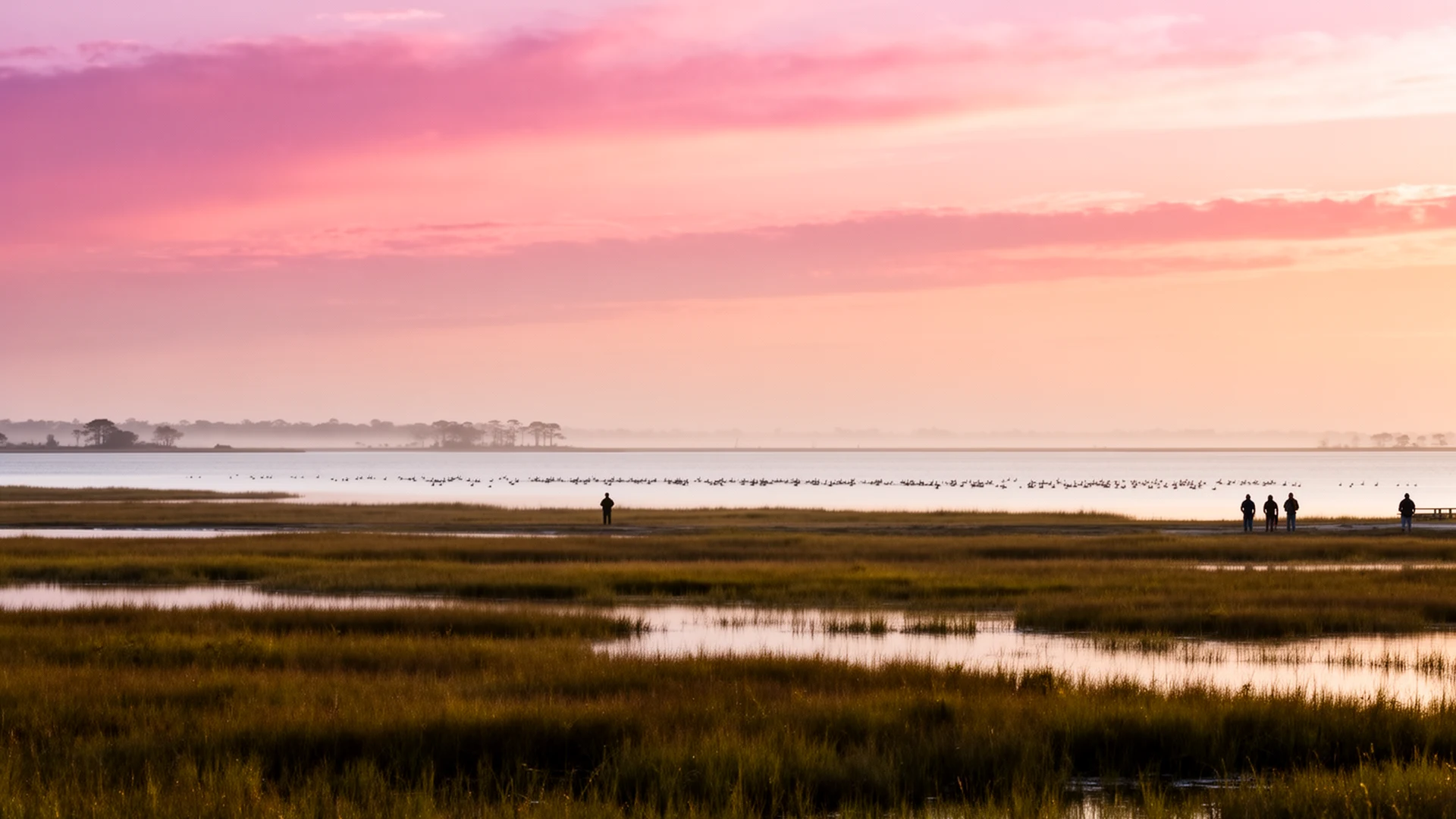



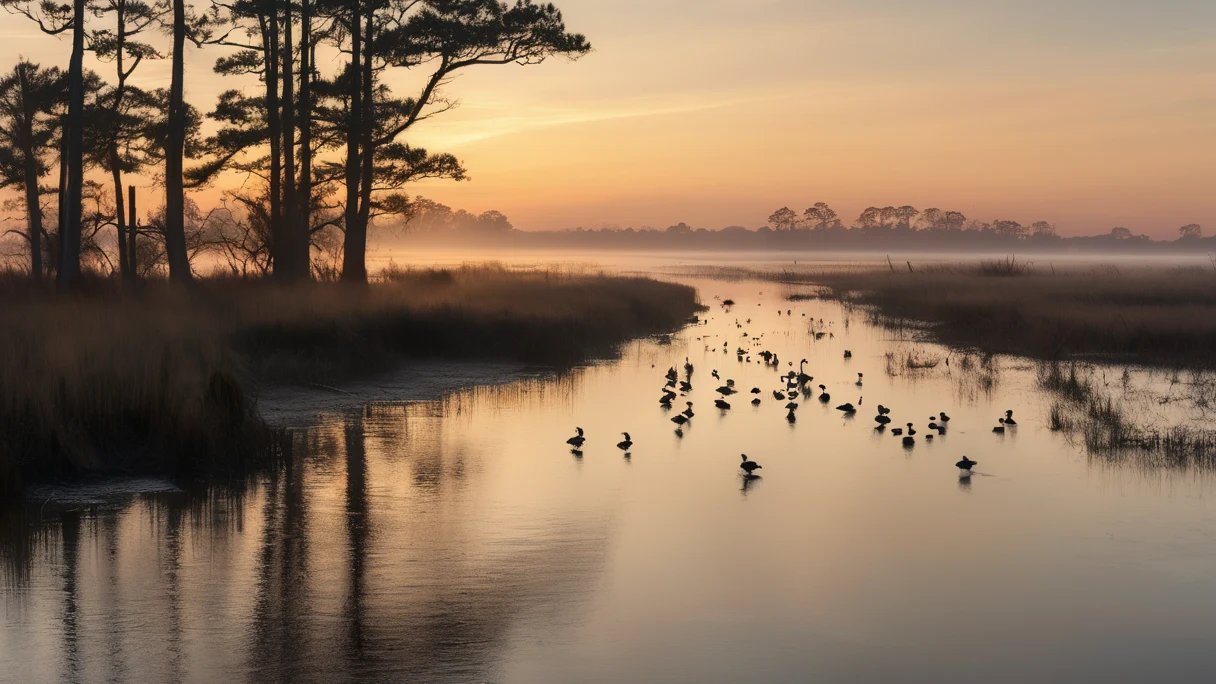
December on the refuge road at first light, and the trucks are already lined up with dog boxes in the beds, headlights cutting the fog off Lake Mattamuskeet. You hear wings before you can see birds. That scene sells a lot of Hyde County ground on its own. It just doesn’t finance it. The question every hunt-land buyer lands on, after the walking and the looking, is a lending question: how does this purchase actually get paid for?
The short answer is that a lot of it doesn’t get paid for with the loan you’d expect. Conventional mortgages are built for houses where people live, and much of what sells in Hyde County is not that. Here’s how the financing actually splits apart, and which path fits which purchase.
Why the mortgage conversation is different here
A conventional mortgage is underwritten for the secondary market, and the secondary market wants a clean single-family primary residence: four walls, a kitchen, a homeowner who lives there. Bare land doesn’t fit that box. A recreational tract with no house doesn’t fit it. And a property with real revenue attached, a lodge with blind leases or a farmhouse with impoundment income, looks to a conventional underwriter less like a home and more like a small business with bedrooms. That is not a value judgment on the property. It is a description of the loan product. The ground can be exactly what you want and still be the wrong fit for the one loan everyone assumes applies.
That’s why the first financing question in Hyde County is not “what’s the rate?” It’s “which of the three purchases am I actually making?”
Three purchases, three lending paths
A house on acreage you’ll live in. If a real house sits on the tract and you’ll occupy it as your primary residence, the normal path is open: conventional, FHA, or, in eligible rural areas, USDA. Mainland Hyde County is broadly eligible for USDA rural financing, which matters for a county at these price points. More on that below.
Bare land or a recreational tract with no house. This is a land loan or a cash purchase. Land loans are a different product from mortgages: shorter terms, larger down payments, and underwriting that leans on the collateral harder because there’s no rental income and no owner-occupancy to steady it. Lenders also know that raw Hyde ground comes with questions, so expect the wetland status, the elevation and fill math, and the CAMA permitting reality to show up in your loan conditions, not as a surprise after closing. Structure the loan around what the ground still has to prove.
A residence with a hunt operation attached. A lodge with documented blind leases, or a farmhouse whose impoundment revenue is part of the deal, moves out of the conventional lane entirely. These are portfolio lender or commercial-hybrid conversations, and they always involve more documentation than a W-2 purchase: the actual lease agreements, payment history across multiple seasons rather than one good year, and a straight answer on whether the leases assign to a new owner at closing. If the income can’t be documented, a lender can’t underwrite it. If the income is the reason you’re buying, then the documents are the deal.
USDA 502 when the home is your home
USDA Rural Development’s Section 502 Guaranteed Loan program is built for exactly the kind of place Hyde County is: rural, affordable, and outside the metro sprawl. The headline features are real: zero down payment, and terms written for buyers who don’t have suburban equity to roll in. Two rules matter more than the marketing, though.
The home has to be your primary residence. No investment properties, no rentals. That’s a real constraint in a county where a lot of purchases carry a revenue angle, and it means 502 only works if you genuinely plan to live there.
And income limits are household-specific. A 502 approval depends on your household’s income against the limit for your area, so it rewards the buyer who fits the program’s intent rather than the one who merely likes the land.
Mainland Hyde is broadly eligible, but eligibility is address-specific. Verify your exact parcel on the official USDA eligibility map before you build a strategy around it, and don’t take anyone’s word for it, including a listing agent’s.
The insurance quote comes before the loan conversation
In Hyde County, the financing conversation starts with insurance, not rates. Wind and flood premiums on soundfront or marsh-adjacent property can move your debt-to-income math enough to change what you qualify for, and at this county’s price points the insurance line carries far more relative weight than it does on a suburban purchase. That’s why the right order of operations is: quote the actual wind and flood coverage on the actual property, then talk loan amount. If the parcel sits in a Special Flood Hazard Area and you’re using a federally backed loan, flood insurance is a condition of the loan, not a negotiable extra.
What a lender will ask about the ground itself
Hyde County ground comes with homework, and lenders know it. Expect to answer for wetland determinations, because ground that’s farmed bone-dry in August can still carry wetland status if the drainage lapses. Expect elevation and fill questions, because building in much of this county means raising the pad, and fill dirt is regulated. Expect access and drainage to be documented rather than assumed, because parcels here often depend on canals and ditches maintained by someone else. Expect a survey to settle boundaries before closing, the way it does on any metes-and-bounds parcel.
And expect the appraisal to be its own conversation. Recreational and hunt tracts sell thinly, and a meaningful share of the comps are cash sales to clubs and associations that don’t behave like owner-occupant purchases. An appraiser who knows waterfowl country reads those sales differently from one who only does subdivisions. The tax value is not the loan value, and neither one is the price.
The honest trade-off
None of this makes Hyde hunt ground a difficult purchase. It makes it a specific one. You’ll trade the easy pre-approval for a land loan’s larger down payment and shorter term, or for USDA’s requirement that you actually live there, or for a portfolio deal’s paperwork stack. You may find seller financing on a tract that suits a patient owner. What you won’t find is a shortcut: if the lease income is load-bearing, bring the documents, and if the land still has to prove itself, price that into the deal rather than assuming it away.
What you get in exchange is ground that stays attainable, a market that rewards buyers who show up in November and do the homework, and a county where the financing is harder than the suburbs but the math still works when it’s done in the right order.
The Bottom Line
Hunt land, recreational tracts, and lodges in Hyde County each have a lending path that fits, and the fit is determined before you make an offer, not at the closing table. Travis has walked refuge boundary maps, read lease documents, and matched hunt-property buyers with lenders who understand waterfowl country every season. Call or text him at (252) 202-4945, or start with the financing chapter for the full walkthrough.