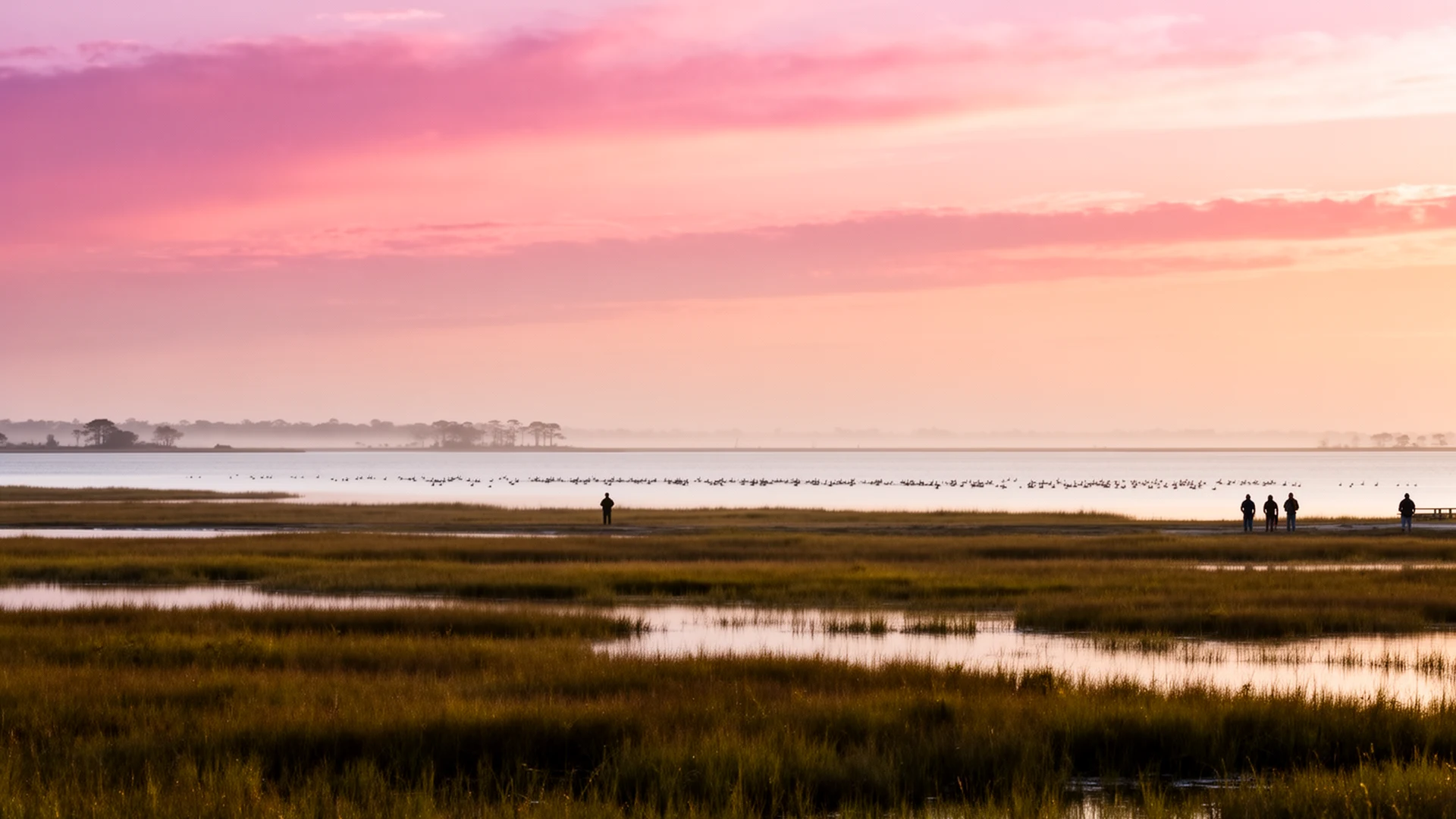


Lake Mattamuskeet exists today because an ambitious engineering project failed. That failure — and the drainage infrastructure it left behind — is the reason so much of the farmland around the lake works the way it does, and it’s worth understanding before you buy any of it.
The attempt. In the early twentieth century, developers set out to drain North Carolina’s largest natural lake, betting the exposed lakebed would make better farmland than lake. They built what was billed at the time as the world’s largest pumping plant and drained the lake more than once. Both attempts were ultimately abandoned as impractical and too expensive. In 1934, the lake and roughly 50,000 acres around it became Mattamuskeet National Wildlife Refuge — verifiable directly through the U.S. Fish & Wildlife Service’s own refuge history, not local folklore.
What stuck around. The lake went back to being a lake. But the farm country surrounding it — the ground buyers can actually purchase today, around Fairfield, Engelhard, Swan Quarter, and the open blocks between them — is the part of that drainage project that held. It stays farmable because of a working network of canals and field ditches moving water off ground that would otherwise hold it.
Why this matters to a buyer, not just a historian. Whether a parcel is a jurisdictional wetland under federal law doesn’t depend on whether it looks wet the day you walk it — soils, hydrology, and vegetation criteria control that determination, and ground that’s farmed bone-dry every August can still carry wetland status if drainage lapses. Before buying, find out who maintains the canals and ditches a parcel depends on, whether drainage easements are recorded, and whether a Corps jurisdictional determination or NRCS certified wetland determination exists for the property. A parcel whose drainage runs through a neighbor’s ditch with nothing in writing is a fundamentally different purchase than one with documented, maintained infrastructure — even when the two look identical from the road.
The old pump station itself — now called the Mattamuskeet Lodge — still stands inside the refuge as a National Register-listed historic landmark. It’s a good visual reminder that this ground has a history, and that history is still doing work under every acre you’re considering.